
PUBLIC SECTOR
Authority in government outlives the decisions that created it
Functions move between portfolios. Secondments end without accounts ending. Program platforms outlive the teams that commissioned them. The Gathid Authority Map models the authority structure those arrangements leave behind, as it exists today.

Where authority accumulates in the public sector
Public sector environments are shaped by continuity and transfer. Programs move between portfolios, staff move on secondment and return, panel and labor-hire arrangements create identities with no clean end date, and core platforms outlive several generations of the teams that ran them. Each arrangement was approved on its own terms. Together they produce authority structures no single agency register was designed to describe.
-
Machinery of government changes move functions, but rarely move the authority attached to them
- Secondments, contractors, and system integrators hold accounts for the life of a program and often past it
- Long-lived platforms grant privilege in ways a modern directory does not reflect
- Delegated and shared administrative accounts obscure who effectively holds control
Why current governance does not answer the question
Certification against the PSPF, an Essential Eight maturity assessment, or an IRAP assessment establishes that controls exist and were tested. A completed access review establishes that a reviewer signed. Neither establishes what a specific identity could reach across the agency's systems right now. That is a structural question, and it is answered by a model rather than by a process.

What the Gathid Authority Map shows
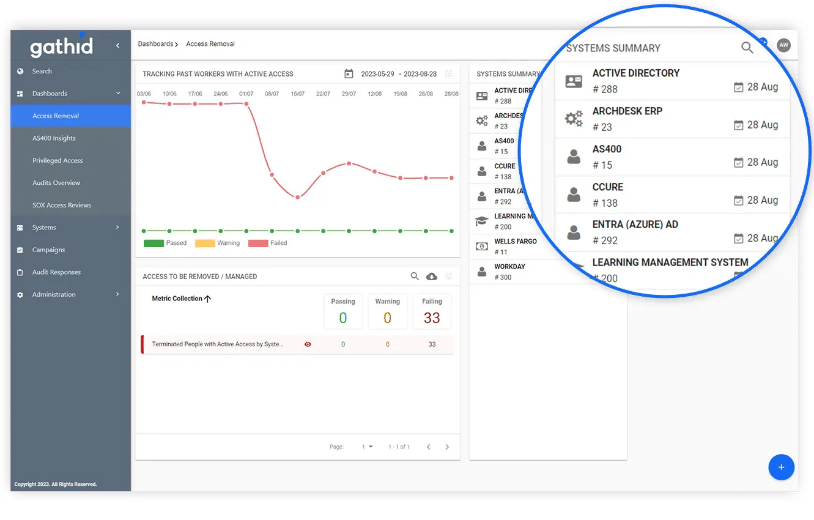
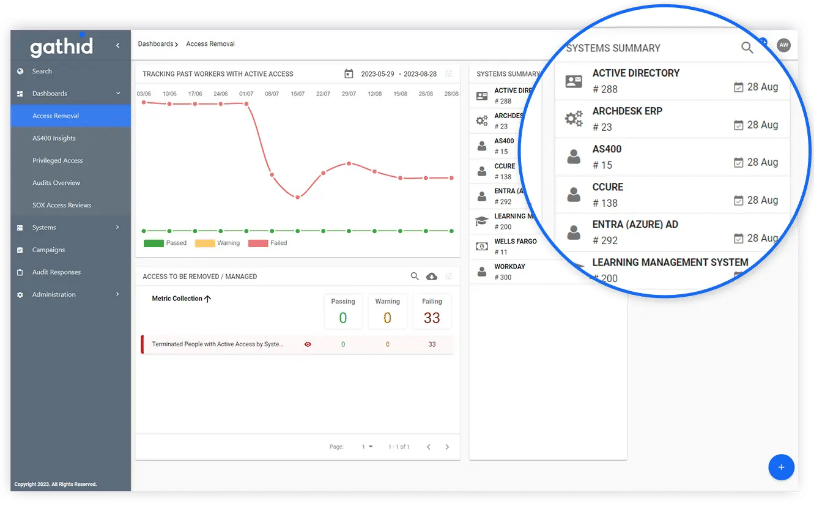
Gathid models the relationships between identities, accounts, systems, roles, credentials, and owners across the systems in scope, then makes that structure queryable.
-
Effective authority for any identity, after inheritance, delegation, and system relationships are resolved
-
Authority pathways that cross agency systems, including routes no single system was built to display
-
Authority concentration, where a small number of identities hold disproportionate reach
-
Authority drift, visible because the model is rebuilt from authoritative source data rather than patched
-
Ownership gaps, where authority exists but accountability for it does not

What this makes possible
-
A defensible answer when an audit office, a minister, or a parliamentary committee asks what an identity could actually do
-
Remediation sequenced by structural consequence rather than by finding count
-
Evidence that identity risk is being managed, not only that identity process is being followed
-
Clarity before automation, so that automation is applied to authority the agency understands
How Gathid fits your stack
Alongside your stack, not instead of it. Gathid works with the IAM, IGA and PAM platforms the agency has already invested in, giving them a complete picture of authority to act on.
Understand, measure, control. Authority structures you can see, quantify and change deliberately, rather than discover during an incident or an audit.
Connected to where the work happens. The Gathid Authority Map is reachable through the API and a permission-scoped MCP server, and raises notifications and tickets in the service management systems your agency already runs.
Attributable by design. The model reasons, your people decide. Every change stays traceable to the officer who approved it, which is what makes the evidence hold in front of an audit office.
Book a Business Authority Exposure Briefing
Before Gathid, managing identity access felt like a maze. Now, it's streamlined and secure. A game-changer for our cybersecurity."
The Power of Gathered Intelligence
Inspired by the power of gathered identities, Gathid pinpoints identity and access anomalies, symbolized by our iconic blue dot. This isn’t just pattern recognition; it’s 20 years of expertise in distinguishing critical insights from the noise to ensure the integrity and security of your identity information across your systems.
Why Choose Us

Expertise & Experience
Gathid stands out with over two decades of industry leadership, offering unrivaled insights and proven solutions across complex identity landscapes.

Proactive Approach
Gathid helps anticipate and mitigate identity threats before they arise, ensuring your digital ecosystem remains resilient against emerging challenges.

Scalable
Solution
Our scalable solution adapts to your growing needs, ensuring seamless integration and performance regardless of your organization’s size.

End-to-End
Support
From initial consultation to ongoing utilization, Gathid provides comprehensive support, ensuring your identity governance framework thrives.
We partner with forward-thinking companies in sectors like mining, manufacturing and banking (spanning 1,000 to 100,000 employees) who put a premium on cutting-edge technology and ironclad security.
Frequently Asked Questions
What is Enterprise Authority Assurance?
It is the practice of knowing, at any moment, what every identity in the agency could actually reach across its systems, and being able to prove it. Access governance records what was granted and whether the grant was reviewed. Authority assurance models what those grants add up to once inheritance, delegation and system relationships are resolved, so the agency can answer a structural question with evidence rather than a process record.
What does “effective authority” mean?
Effective authority is what an identity can do in practice, as opposed to what it was assigned. A contractor granted read access to one system may hold write access to another through a nested group, a shared administrative account or an integration set up years ago. Effective authority is the result of all those relationships together, and it is what an attacker, an auditor or a minister would care about.
How is this different from an access review or a certification?
An access review establishes that a reviewer examined a list of entitlements and signed. PSPF, Essential Eight and IRAP work establish that controls exist and were tested. All of these describe intent and process. None of them states what a specific identity could reach across the agency right now, because that answer only exists in the relationships between systems, which no single register was designed to hold. Gathid answers the structural question; the existing frameworks continue to answer the control question.
Does Gathid replace our IAM, IGA or PAM platforms?
No. Those platforms grant, provision and protect access, and the agency should keep using them. Gathid sits alongside them and supplies the complete picture of authority they lack individually, so that provisioning decisions, access reviews and privileged access controls act on authority the agency actually understands.
How does this help with PSPF, Essential Eight or IRAP obligations?
Gathid is not a certification and does not replace an assessment. What it adds is evidence. When an assessor, an audit office or a parliamentary committee asks what a specific identity could do, the agency can produce a defensible, traceable answer drawn from authoritative source data, rather than a list of reviews completed. That evidence supports maturity uplift under the Essential Eight, strengthens responses under the PSPF’s access control requirements and gives IRAP assessors a view of effective privilege that policy documents cannot.
The Power of Gathered Intelligence