
TECHNOLOGY COMPANIES
Your pipelines hold more authority than most of your people
Cloud roles assume other roles. Pipelines deploy with standing credentials. Service principals outlive the projects that created them. The Gathid Authority Map models what that machinery can actually reach.

Where authority accumulates in healthcare
Engineering organizations grant authority at the speed of delivery. Infrastructure is defined in code, roles assume other roles, pipelines run with standing credentials so that deployments do not block, and developer self-service was introduced precisely so that access requests stop being a bottleneck. Every one of those decisions is sound engineering practice. Collectively they produce authority chains that are several hops long and are not described anywhere a reviewer looks.
-
Role assumption chains across cloud accounts, subscriptions, and projects
-
Pipeline and automation credentials with production reach and indefinite lifetime
-
Service principals and workload identities created per project and rarely retired
-
Self-service grants that are correct individually and consequential in combination
Why current governance does not answer the question
Cloud-native tooling reports entitlements well within its own boundary. A governance platform reports what was requested and approved. Neither computes multi-hop reachability across providers, pipelines, and internal systems, so the question of what a specific token could ultimately reach usually becomes a manual investigation rather than a query.

What the Gathid Authority Map shows
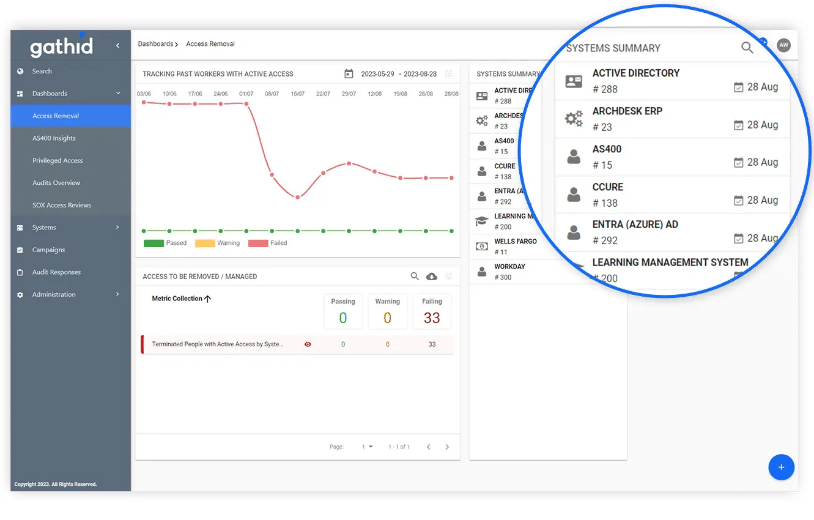
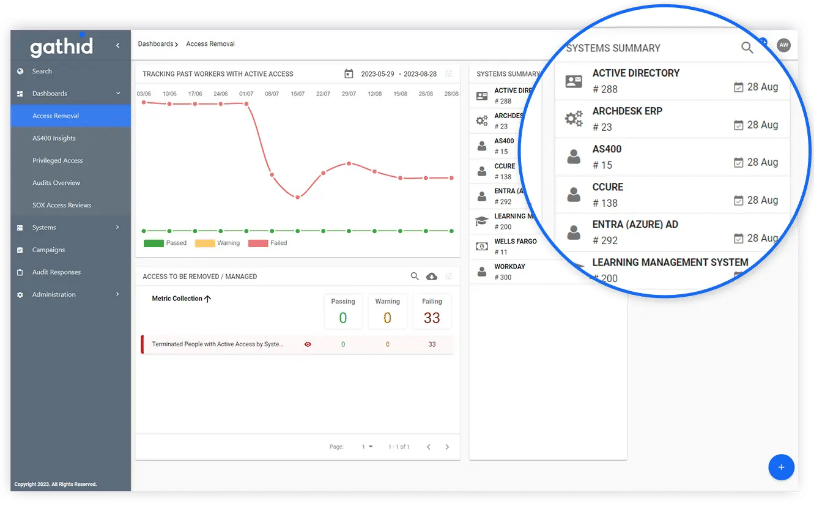
Gathid persists relationships directly and traverses them natively, which is what makes multi-hop questions answerable rather than reconstructable.
-
Reachability for a named identity, account, credential, or token across systems in scope
-
Authority pathways through role assumption, group nesting, and delegation
-
Non-human identities holding production authority without a current owner
-
Authority concentration in platform, SRE, and release engineering functions
-
Authority drift after each rebuild, rather than at the next audit

What this makes possible
-
Blast radius computed from current data, without a services engagement to reconstruct it
-
Authority questions answered through the API or a permission-scoped MCP server by your own analysts, workflows, and AI assistants
-
Structural risk discussed in engineering terms, with relationships rather than findings
-
Automation applied to authority that is understood first, which is the sequence that keeps automation safe
How Gathid fits your stack
Alongside your stack, not instead of it. Gathid works with the IAM, IGA and PAM platforms the agency has already invested in, giving them a complete picture of authority to act on.
Understand, measure, control. Authority structures you can see, quantify and change deliberately, rather than discover during an incident or an audit.
Connected to where the work happens. The Gathid Authority Map is reachable through the API and a permission-scoped MCP server, and raises notifications and tickets in the service management systems your agency already runs.
Scoped by default. The MCP server is off until a tenant enables it, and every query runs under the requesting user's own permissions. A client sees exactly what that person could already see, and cannot write back into your source systems.
Attributable by design. The model reasons, your people decide. Every change stays traceable to the officer who approved it, which is what makes the evidence hold in front of an audit office.
Book a Business Authority Exposure Briefing
Before Gathid, managing identity access felt like a maze. Now, it's streamlined and secure. A game-changer for our cybersecurity."
The Power of Gathered Intelligence
Inspired by the power of gathered identities, Gathid pinpoints identity and access anomalies, symbolized by our iconic blue dot. This isn’t just pattern recognition; it’s 20 years of expertise in distinguishing critical insights from the noise to ensure the integrity and security of your identity information across your systems.
Why Choose Us

Expertise & Experience
Gathid stands out with over two decades of industry leadership, offering unrivaled insights and proven solutions across complex identity landscapes.

Proactive Approach
Gathid helps anticipate and mitigate identity threats before they arise, ensuring your digital ecosystem remains resilient against emerging challenges.

Scalable
Solution
Our scalable solution adapts to your growing needs, ensuring seamless integration and performance regardless of your organization’s size.

End-to-End
Support
From initial consultation to ongoing utilization, Gathid provides comprehensive support, ensuring your identity governance framework thrives.
We partner with forward-thinking companies in sectors like mining, manufacturing and banking (spanning 1,000 to 100,000 employees) who put a premium on cutting-edge technology and ironclad security.
Frequently Asked Questions
What is Enterprise Authority Assurance?
It is knowing, at any moment, what every identity, credential and token in your environment could actually reach, and being able to prove it. Cloud-native tooling reports entitlements well within its own boundary. Governance platforms report what was requested and approved. Authority assurance models what all of that adds up to once role assumption, group nesting, delegation and pipeline credentials are resolved across providers and internal systems, so reachability is computed rather than assumed.
What does “reachability” mean here, and how is it different from entitlements?
An entitlement is a single grant: this role can read that bucket. Reachability is the full set of resources an identity can get to by following every grant from where it starts, including the roles it can assume, the groups those roles inherit, the pipelines those groups can trigger and the credentials those pipelines carry. Most consequential access in a modern stack is several hops from its origin. Entitlement reports show the first hop. The Authority Map follows the chain.
How is Gathid different from CIEM, CSPM or our identity governance platform?
CIEM and CSPM tools do a good job of analyzing permissions inside a cloud provider, and some reach across providers. Governance platforms manage requests, approvals and reviews. Gathid is built for the question neither answers well: multi-hop reachability across cloud accounts, CI/CD systems, internal platforms and the identity provider at the same time, with relationships persisted and traversed natively rather than reconstructed per query. It works alongside those tools and gives them a complete picture to act on.
How does Gathid treat service principals, workload identities and automation credentials?
As first-class identities with authority and, frequently, no owner. The map shows each one, the project or pipeline that created it, what it can reach today and whether anyone is accountable for it. Workload identities created per project and never retired are a standard finding, and the map makes retiring them a deliberate, evidenced decision rather than a guess about what might break.
How do we query Gathid from our own tooling?
Through the API, which returns relationships and pathways rather than findings, so your own services, workflows and notebooks can ask reachability questions directly. Findings can also be routed into your existing issue and change systems, so remediation follows the change process your engineers already use.
What does the MCP server do, and is it safe to connect to production?
The MCP server lets AI assistants and agents query the Authority Map directly. It is off by default until a tenant enables it. Every query runs under the requesting user’s own permissions, so a client sees exactly what that person could already see, and it cannot write back into your source systems. In practice that means an engineer, or an agent working on their behalf, can ask what a given token could reach from inside their existing tools, with no exported data and no new standing access.
The Power of Gathered Intelligence