
INSURANCE
Your delegated authority is documented. Your system authority may not match it
Binders, brokers, managing agents, and third-party administrators hold authority by agreement. The systems behind those agreements grant authority of their own. The Gathid Authority Map shows what the systems actually permit.

Where authority accumulates in insurance
Insurance is one of the few industries where delegated authority is a formal, contracted concept. Underwriting authority, claims settlement limits, and binding arrangements are written down and governed carefully. What is rarely modeled is the system authority that sits underneath: what an intermediary, administrator, or internal handler can actually do inside policy administration, claims, and payment platforms once roles, inheritance, and integrations are resolved.
-
Broker, managing agent, and third-party administrator identities inside core platforms
-
Claims handling authority that does not align with the documented settlement limit
-
Policy amendment and endorsement rights spread across several systems
-
Long-running integrations and service accounts moving data and value between platforms
Why current governance does not answer the question
Delegated authority is assured through audit of the agreement and sampling of decisions. That establishes whether authority was exercised within its terms. It does not establish what the system would have permitted had someone chosen to exercise more, and the gap between the two is where both fraud exposure and regulatory findings tend to sit.

What the Gathid Authority Map shows
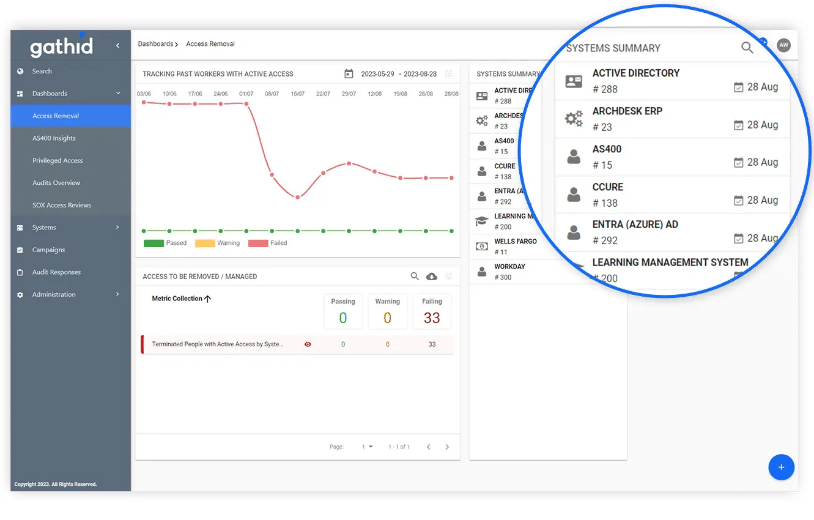
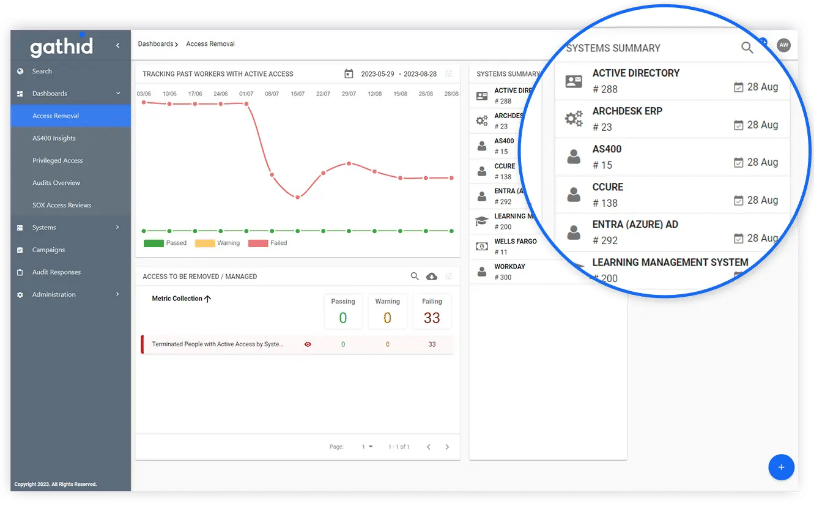
Gathid models the relationships between internal and external identities, accounts, roles, and systems in scope, and makes the resulting structure queryable.
-
Effective authority held by delegated and intermediary identities, resolved across systems
-
Authority pathways from claim creation through assessment to payment
-
Combinations that permit a single identity to originate, approve, and settle
-
Authority concentration in claims operations and policy administration
-
Authority drift across acquisitions, portfolio transfers, and platform migrations

What this makes possible
-
Delegated authority assurance grounded in system reality, not only agreement terms
-
Fraud exposure discussed as a structure rather than as a set of detected cases
-
Portfolio and book transfers completed with the inherited authority understood
-
Conduct and prudential reporting supported by evidence of structural risk management
How Gathid fits your stack
Alongside your stack, not instead of it. Gathid works with the IAM, IGA and PAM platforms the agency has already invested in, giving them a complete picture of authority to act on.
Understand, measure, control. Authority structures you can see, quantify and change deliberately, rather than discover during an incident or an audit.
Connected to where the work happens. The Gathid Authority Map is reachable through the API and a permission-scoped MCP server, and raises notifications and tickets in the service management systems your agency already runs.
Attributable by design. The model reasons, your people decide. Every change stays traceable to the officer who approved it, which is what makes the evidence hold in front of an audit office.
Book a Business Authority Exposure Briefing
Before Gathid, managing identity access felt like a maze. Now, it's streamlined and secure. A game-changer for our cybersecurity."
The Power of Gathered Intelligence
Inspired by the power of gathered identities, Gathid pinpoints identity and access anomalies, symbolized by our iconic blue dot. This isn’t just pattern recognition; it’s 20 years of expertise in distinguishing critical insights from the noise to ensure the integrity and security of your identity information across your systems.
Why Choose Us

Expertise & Experience
Gathid stands out with over two decades of industry leadership, offering unrivaled insights and proven solutions across complex identity landscapes.

Proactive Approach
Gathid helps anticipate and mitigate identity threats before they arise, ensuring your digital ecosystem remains resilient against emerging challenges.

Scalable
Solution
Our scalable solution adapts to your growing needs, ensuring seamless integration and performance regardless of your organization’s size.

End-to-End
Support
From initial consultation to ongoing utilization, Gathid provides comprehensive support, ensuring your identity governance framework thrives.
We partner with forward-thinking companies in sectors like mining, manufacturing and banking (spanning 1,000 to 100,000 employees) who put a premium on cutting-edge technology and ironclad security.
Frequently Asked Questions
What is Enterprise Authority Assurance?
It is knowing, at any moment, what every internal and delegated identity could actually do inside your policy, claims and payment platforms, and being able to prove it. Delegated authority audits establish whether authority was exercised within its terms. Access reviews establish that a manager signed. Authority assurance models what the system grants behind those arrangements add up to once roles, inheritance and integrations are resolved, so exposure is measured rather than assumed.
What is the difference between delegated authority and system authority?
Delegated authority is contractual: a binder, a claims settlement limit or an underwriting mandate, written down and governed carefully. System authority is what the platform actually permits: the endorsements an identity can post, the claims it can approve, the payments it can release and the limits the system enforces or fails to enforce. The two are supposed to match. In practice they drift apart through role changes, exceptions and migrations, and the gap is where fraud exposure and regulatory findings tend to sit.
How is Gathid different from our delegated authority audit?
A delegated authority audit samples decisions and checks them against the agreement. It answers whether authority was used correctly. It cannot answer what the system would have allowed had someone chosen to exceed their mandate, because the audit never tests the ceiling. Gathid models the ceiling: the full set of actions each identity could take across the platforms in scope. The audit continues to answer the conduct question; the map answers the structural one.
How does Gathid handle brokers, managing agents and third-party administrators?
As identities with authority inside your platforms, assessed on what they can actually reach rather than on what the agreement says. A third party administrator may hold claims roles across several lines, a managing agent’s staff may share credentials under an arrangement nobody reviews, and a broker integration may carry authority into policy administration that no agreement contemplated. The map shows the combined reach of each external identity and the owner inside the insurer who is accountable for it.
How does Gathid treat service accounts and integrations between platforms?
As identities with real authority and, usually, no owner. Integrations that move policy, claims and payment data between core systems often carry authority that exceeds any human role, because they were built so that processing never blocks. The map shows what each one can reach today, which platforms it connects and who is accountable for it, so a credential created for a migration years ago is treated with the same scrutiny as a claims handler’s login.
Does Gathid change access automatically?
No. The model reasons and raises what it finds; your people decide. Findings can be routed as notifications and tickets into the systems your claims, underwriting and vendor management teams already use, and every change remains attributable to the person who approved it. That separation is what makes delegated authority evidence hold up.
The Power of Gathered Intelligence